
Suit Up: The Dapper Evolution of the Suit and Tie
Updated: Aug 3
Suit Up: The Dapper Evolution of the Suit and Tie
Few garments have enjoyed the longevity, versatility and cultural authority of the suit. For more than two centuries, it has clothed kings and criminals, statesmen and movie stars, captains of industry and nervous young men attending their first job interviews. Its proportions have expanded and contracted, its colours have brightened and darkened, and its accompanying tie has gone from practical neckwear to almost pure decoration. Yet the essential combination remains instantly recognizable.
The suit has survived because it has never really stopped evolving.
From Royal Courts to the Modern Coat
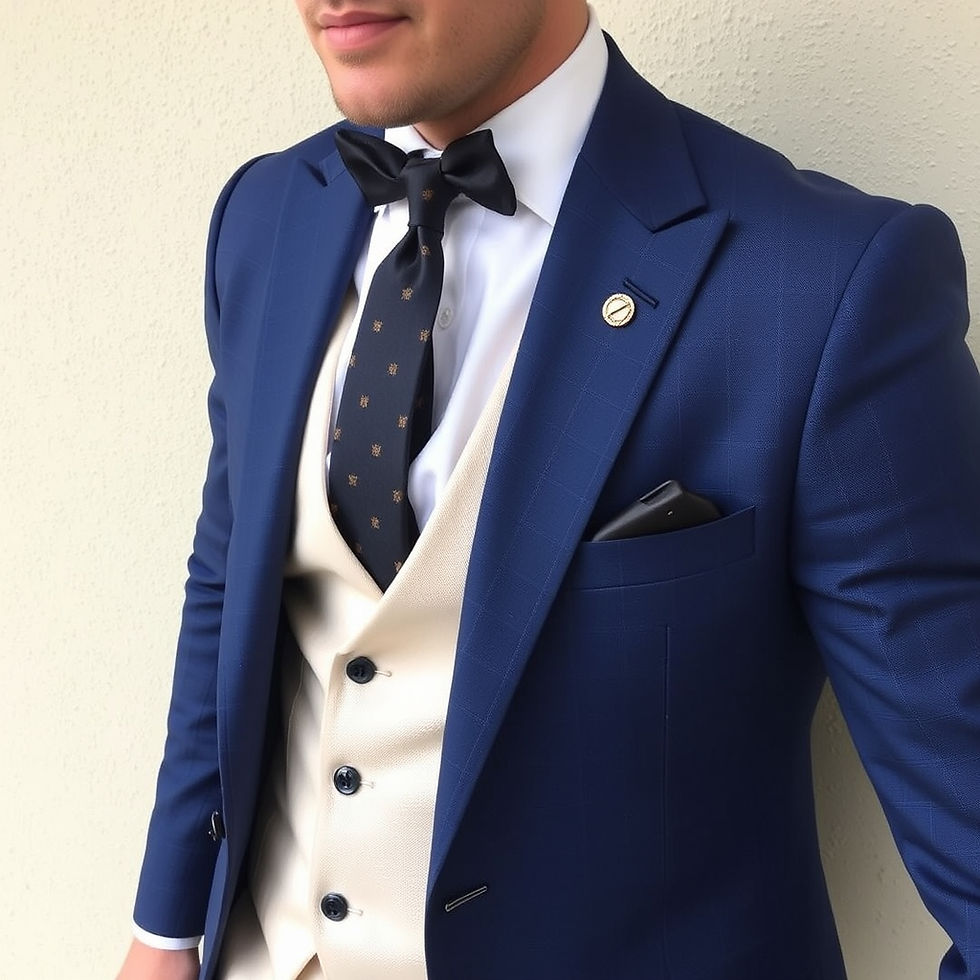
The origins of the modern suit are often traced to the court of King Charles II, who introduced a more restrained style of male dress in England during the 1660s. Long coats, waistcoats and breeches began replacing the elaborate doublets and cloaks of earlier generations. The result was still far removed from anything hanging in a contemporary wardrobe, but the basic idea was established: coordinated garments forming a unified outfit.
By the early 19th century, the suit had acquired an unlikely revolutionary in Beau Brummell. A friend of the future King George IV, Brummell rejected the brightly coloured silks and extravagant ornamentation favoured by aristocratic men. He instead promoted dark, precisely tailored coats, pale waistcoats, fitted trousers, immaculate linen and carefully tied neckcloths.
Brummell’s influence helped establish a central principle of menswear: distinction could come from fit, proportion and restraint rather than decoration. The gentleman did not need to sparkle like a chandelier. He needed to look as though every detail had been considered.
The Industrial Revolution pushed the suit beyond court and country estate. Growing cities produced a new professional class of bankers, lawyers, merchants and administrators, all of whom required clothing that projected seriousness and respectability. By the Victorian period, the lounge suit—originally an informal alternative to frock coats and morning dress—was gaining acceptance for everyday business.
It consisted of a jacket, waistcoat and trousers cut from matching cloth: the original three-piece suit.
How the Tie Took Hold
The tie followed its own winding path. Its distant ancestor was the cravat, named after Croatian soldiers whose knotted neckcloths attracted attention in 17th-century France. European gentlemen embraced the style, transforming a practical strip of fabric into an increasingly elaborate fashion statement.
During the 19th century, cravats gradually became simpler and narrower. The four-in-hand knot, reportedly named for the way carriage drivers tied their scarves, emerged as a practical option. By the early 20th century, the familiar long necktie had taken shape.
The tie served no meaningful protective purpose. That was part of its appeal. It became a small canvas for personality within the increasingly standardized male wardrobe. A sober businessman could wear a discreet club stripe; a more adventurous gentleman could choose paisley, foulard or a rich knitted silk. The suit established the rules. The tie allowed a little improvisation.
The Suit’s Golden Age
Between the 1920s and the 1960s, the suit reached the height of its cultural power. Men wore suits not only to offices and weddings but to restaurants, theatres, railway stations and sporting events. Even working-class men often owned a respectable suit for church, social occasions and Sunday outings.
The 1930s introduced broad shoulders, suppressed waists and generously cut trousers. The silhouette suggested strength without sacrificing elegance. Hollywood amplified the effect. Cary Grant, Clark Gable and Fred Astaire demonstrated that a suit could be authoritative, romantic or athletic. Astaire, in particular, made tailoring appear effortless. His jackets moved with him rather than wearing him like armour.
Wartime fabric restrictions brought narrower lapels and simpler construction, but postwar tailoring soon returned with renewed confidence. In Britain, Savile Row maintained its structured tradition, while Italian tailoring began offering something lighter and softer. American manufacturers developed the relaxed “sack suit,” with natural shoulders and a straighter body, creating the foundation of Ivy League style.
Then came the 1960s and Sean Connery’s James Bond. Connery’s suits were lean, controlled and masculine, proving that refinement did not require fragility. A well-cut dinner jacket looked perfectly natural at the baccarat table—and only slightly less natural during a car chase.
Rebellion, Excess and Reinvention
By the 1970s, the suit faced a cultural revolt. Casual clothing had become a symbol of youth and independence, while traditional tailoring could appear corporate or conservative. Suits responded with wide lapels, flared trousers, bold colours and synthetic fabrics. Some examples were magnificent. Others looked as though the wearer had lost a bet.
The 1980s restored the suit’s authority through exaggeration. Wall Street, television executives and ambitious young professionals embraced pronounced shoulders, double-breasted jackets and power ties. Giorgio Armani simultaneously offered a softer interpretation, removing much of the internal structure and allowing fabric to drape more naturally around the body.
The 1990s loosened everything. Jackets grew longer, trousers became fuller and ties widened. By the early 2000s, the pendulum swung sharply in the opposite direction. Designer suits became cropped and extremely slim, with narrow lapels and ankle-hugging trousers. At its best, the look was sleek and modern. At its worst, it appeared that a man had borrowed his suit from a younger brother.
Today, tailoring has settled into a more forgiving middle ground. Jackets are becoming slightly longer, trousers are regaining width and softer construction is increasingly common. The best contemporary suits draw from several traditions without becoming costumes: British structure, Italian ease and American practicality.
Does the Tie Still Matter?
The tie no longer rules the workplace. Technology companies, remote work and changing office cultures have made open collars commonplace. Even industries once devoted to conservative dress now accept far more casual clothing.
This has not killed the tie. It has liberated it.
A tie worn because regulations demand it can feel like a uniform. A tie worn by choice signals intention. It can sharpen a business suit, add ceremony to an evening outfit or bring colour and texture to a tweed jacket. The key is making it look deliberate. The knot should suit the collar, the width should complement the lapels and the tip should meet the waistband. Novelty ties should generally remain where they belong: at the office Christmas party, and even then only under supervision.

The Enduring Power of Dressing Well
A suit cannot provide character, competence or confidence. It can, however, give those qualities a visible form. Good tailoring changes posture. It encourages a man to stand straighter, move with purpose and pay attention to details.
The modern gentleman does not need a wardrobe filled with suits. One well-cut navy or charcoal example can handle interviews, weddings, dinners, funerals and nearly any occasion requiring respect. Fit matters more than the label. A moderately priced suit altered by a skilled tailor will almost always look better than an expensive one worn straight from the rack.
After centuries of change, that remains the suit’s quiet genius. It adapts without surrendering its identity. Lapels may widen, trousers may loosen and ties may come and go, but the underlying message endures.
You made an effort. You understand the occasion. You came properly dressed.


Comments