
Winter Armour : The Gentleman's Guide to Men's Winter Dress Boots
As late October rolls in and temperatures inevitably plummet, a familiar sartorial crisis emerges. Pavements turn slick with rain, frost, and, eventually, the dreaded grey slush of winter. Faced with these conditions, far too many men panic. They abandon all style principles, pack away their elegant leather shoes, and resort to clunky, synthetic snow boots that ruin the line of a beautifully tailored pair of trousers.

It does not have to be this way. Winter footwear should never demand a compromise between remaining protected from the elements and looking impeccably put together. By leaning into heritage craftsmanship and genuine utility, you can build a cold-weather rotation that thrives in unforgiving conditions while maintaining a strict, anti-flex aesthetic. True winter luxury isn't a visible designer logo plastered across a nylon upper; it's heavy pebble-grain leather that naturally repels water, a robust storm welt that seals out moisture, and a sole designed to grip wet tarmac without looking like a tractor tyre.
Here is the definitive guide to mastering men's winter dress boots, so you can step into the colder months with armour as stylish as it is invincible.
The Mechanics of Winter Dress Boots Survival
Before we explore the specific silhouettes every man should own, you need to understand the engineering that separates a proper winter boot from a flimsy fashion piece. Any reliable cold-weather shoe comes down to three non-negotiable construction details.
The Goodyear Storm Welt: Engineering Out the Elements
Most high-quality dress shoes utilise standard Goodyear welting, where a strip of leather (the welt) is stitched to both the upper and the insole, and then the outsole is stitched to the welt. However, for true winter protection, look for a Goodyear storm welt.

A storm welt uses a slightly wider strip of leather that features a pronounced rib. This rib bends upward, creating a physical barrier, or "wall", that sits flush against the upper of the boot. This structural addition seals out water, slush, and road salt from seeping into the gap between the upper and the footbed. This masterful piece of traditional shoemaking keeps your feet completely dry, even if you find yourself standing in a shallow puddle on a bleak November morning.
Dainite & Commando Soles: Traction Without the Bulk
Leather soles are magnificent for the boardroom, but they're a hazard on wet autumn leaves and icy pavements. Rubber traction is essential, but the type of rubber dictates whether the boot remains elegant or becomes overly casual.
Enter the Dainite sole. Manufactured in England by the Harborough Rubber Company since 1894, Dainite is the gold standard for sartorial winter footwear. Its distinct studded pattern provides exceptional grip while preventing mud and debris from clogging the tread. More importantly, Dainite soles stay remarkably low-profile. From the side, a Dainite-soled boot looks virtually identical to a leather-soled shoe, preserving the refined silhouette required for formal tailoring.
For proper foul-weather excursions, the Commando sole—characterised by its deep, rugged lugs—offers maximum traction. While slightly chunkier, the Commando sole, paired with the right heritage boot, provides an unapologetically robust foundation that looks brilliant with heavier winter fabrics.
Pebble Grain & Waxy Leathers: Nature's Repellent
Smooth calfskin is highly susceptible to water damage and salt stains. For winter, switch to leathers with inherent protective properties.
Pebbled grain (or Scotch grain) leather originated in Scotland. The leather is embossed with a heavy, textured pattern, then treated with waxes and oils. This micro-texture isn't merely cosmetic; it helps break up water's surface tension, encouraging droplets to roll off rather than soak in. Furthermore, the textured surface effortlessly hides the inevitable scuffs and scrapes of winter streets. Similarly, heavily oiled leathers—like Horween's famous Chromexcel—are stuffed with natural greases during tanning, making them highly water-resistant and incredibly resilient.
The Four Essential Men's Winter Dress Boot Archetypes
With the mechanical foundations established, we can categorise the winter footwear rotation into four distinct archetypes. Having one of each ensures you are perfectly equipped for any dress code the season throws at you.
1. The Elevated Dress Brogue Boot
This is the formal anchor of your winter wardrobe. A wingtip brogue boot in a dark brown or oxblood pebble grain immediately solves the dilemma of what to wear with a heavy wool suit when the weather is appalling.
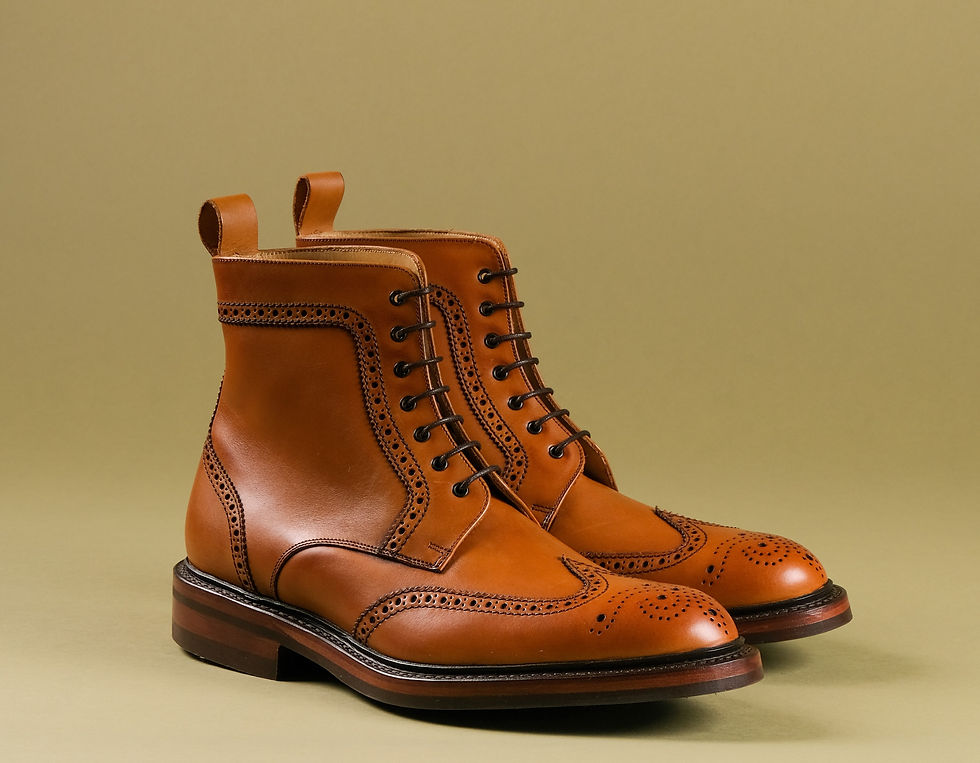
Historically, Scottish and Irish gamekeepers designed the perforations (broguing) on these boots to let water drain from their footwear when crossing boggy terrain. Today, while the holes are strictly decorative, that heritage visual weight harmonises perfectly with winter tailoring. The micro-texture of the grain leather hides moisture, whilst the brogue detailing breaks up the vast expanse of leather, preventing the boot from looking like a featureless Wellington. Paired with a storm welt, this boot maintains absolute elegance while serving as a waterproof fortress.
2. The Sleek Dainite-Soled Chelsea
For a cleaner, more streamlined aesthetic, the Chelsea boot is unmatched. Originating in the Victorian era as a riding boot, its laceless design and elasticated side gussets make it incredibly practical for slipping on and off when escaping the cold.

The key factor in a winter Chelsea is a low-profile Dainite rubber sole. The Chelsea boot's smooth, uninterrupted upper demands a sole that doesn't disrupt its sleek lines. A Dainite sole offers serious traction on wet, leafy pavements but remains completely undetectable from a standard standing profile. This preserves the sharp, unbroken line of a tailored trouser leg, making the Chelsea boot the ultimate weapon for smart-casual evening wear or navigating the city on a damp commute.
3. The Rugged Grain Chukka
Sitting at the slightly more relaxed end of the sartorial spectrum, the Chukka boot is the perfect smart-casual bridge. While desert boots (a sub-category of the Chukka) utilise crepe soles that turn to frictionless ice-skates in winter, a proper winter Chukka is built entirely differently.

Constructed from a robust, textured grain leather and set atop a studded rubber sole, the winter Chukka pairs exceptionally well with heavier seasonal fabrics. It is the ideal companion for thick wool flannel trousers, heavy selvedge denim, or a classic Ventile cotton raincoat. It is the boot you reach for when heading out for a Sunday pub roast: relaxed enough to feel leisurely, yet structured and weatherproof enough to handle a brisk walk through the countryside.
4. The Heritage Outdoor Boot
Some days the weather is genuinely unforgiving—deep snow, torrential rain, or muddy trails. This is where the Heritage Outdoor Boot becomes essential.

Forget neon-accented, synthetic hiking gear smothered in visible branding. We are talking about classic, alpine-inspired designs. Look for boots featuring heavy-duty D-ring lacing hardware, heavily oiled leathers, a fully gusseted tongue (which prevents water from entering through the laces), and a thick Commando sole. This is about genuine utility. A proper heritage hiker looks phenomenal when paired with a chunky Scottish cashmere knit and heavy denim. Rugged, utilitarian, and strictly logo-free, it proves you don't need to compromise your aesthetic standards to conquer the elements.
The Unsung Hero: Winter Hosiery
Investing in Goodyear-welted armour is futile if you are wearing thin cotton dress socks underneath. Cotton retains moisture, so any sweat your feet produce sits against your skin and chills you to the bone.
Upgrade your winter hosiery to Merino wool or a cashmere blend. Merino wool is naturally thermoregulating and antimicrobial, wicking moisture away from the foot whilst retaining exceptional heat. A mid-weight Merino sock pairs seamlessly with all four boot archetypes, ensuring the internal climate of your footwear remains as comfortable as the exterior is resilient.
Maintaining Your Winter Investment
Even the finest Goodyear-welted boots require maintenance to survive a gruelling winter. Central heating, freezing temperatures, and road salt can dry out and destroy leather if left untreated.
Leather Conditioning and Cedar Trees
First, insert unvarnished cedar shoe trees as soon as you take your boots off. The cedar absorbs the moisture your feet generate, while the rigid structure prevents the wet leather from warping and creasing as it dries. Never place your boots directly next to a radiator or open fire; the intense heat will crack the leather irreparably. Let them dry naturally at room temperature.
Secondly, invest in a premium leather conditioner and a beeswax-based polish. Wipe down your boots with a damp cloth after every wear to remove corrosive road salt. Once a fortnight, massage a rich conditioner into the uppers to replenish natural oils, then apply a layer of wax polish to restore the water barrier. This simple ritual ensures your footwear will last for decades, not just a single season.
Put Your Boots to the Test: Planning Your Winter Escape
Once you have secured the proper winter armour, you need a suitable environment to put them through their paces. Nothing beats navigating the cobbled streets of a historic European city in the depths of winter, wrapped in a heavy overcoat, with reliable Dainite-soled boots carrying you from a warm museum to a fireside pub.
If you want to book a cold-weather getaway to put your new footwear rotation to work, you can secure exceptional rates at heritage hotels in destinations like Edinburgh, Vienna, or Munich. We recommend exploring your accommodation options through Expedia or Booking.com to find lodgings that match a refined, anti-flex travel aesthetic. (Note: booking through these links supports our editorial work at no extra cost to you.)
Navigating winter does not require abandoning your sartorial principles. With Goodyear storm welts, Dainite soles, and robust grain leathers, you can maintain an elegant, uncompromising silhouette no matter what the weather dictates. Invest in proper footwear now, and step into the cold with absolute confidence.
Footnote: We consulted no trend-forecasting algorithms while writing this piece. Good taste remains stubbornly analogue.
Editorial Note: Gentlemen’s Digest remains completely independent. We do not currently participate in affiliate programs or accept sponsored placements for our recommendations, ensuring our editorial advice remains entirely objective, unbiased, and reader-focused.
Explore Our Top Pillars: Visit our Fashion category for more anti-flex style guides, or head to Travel to plan your next cold-weather itinerary.



Comments