
The Best Cameras for Camera Art and Photography
The Best Cameras for Camera Art and Photography
There comes a point when your phone camera, no matter how clever, starts to feel like wearing sneakers to a black-tie dinner. Perfectly useful, yes. But not quite the thing. If you want to take photography seriously — whether that means street shots, portraits, landscapes, moody black-and-white work, or artful images that look like they belong on a gallery wall rather than buried in your camera roll — the right camera matters.
The good news? You do not need to remortgage the house or start speaking entirely in lens jargon. The best camera is the one that makes you want to shoot. Here are some of the finest choices for men looking to get into photography as an art form.
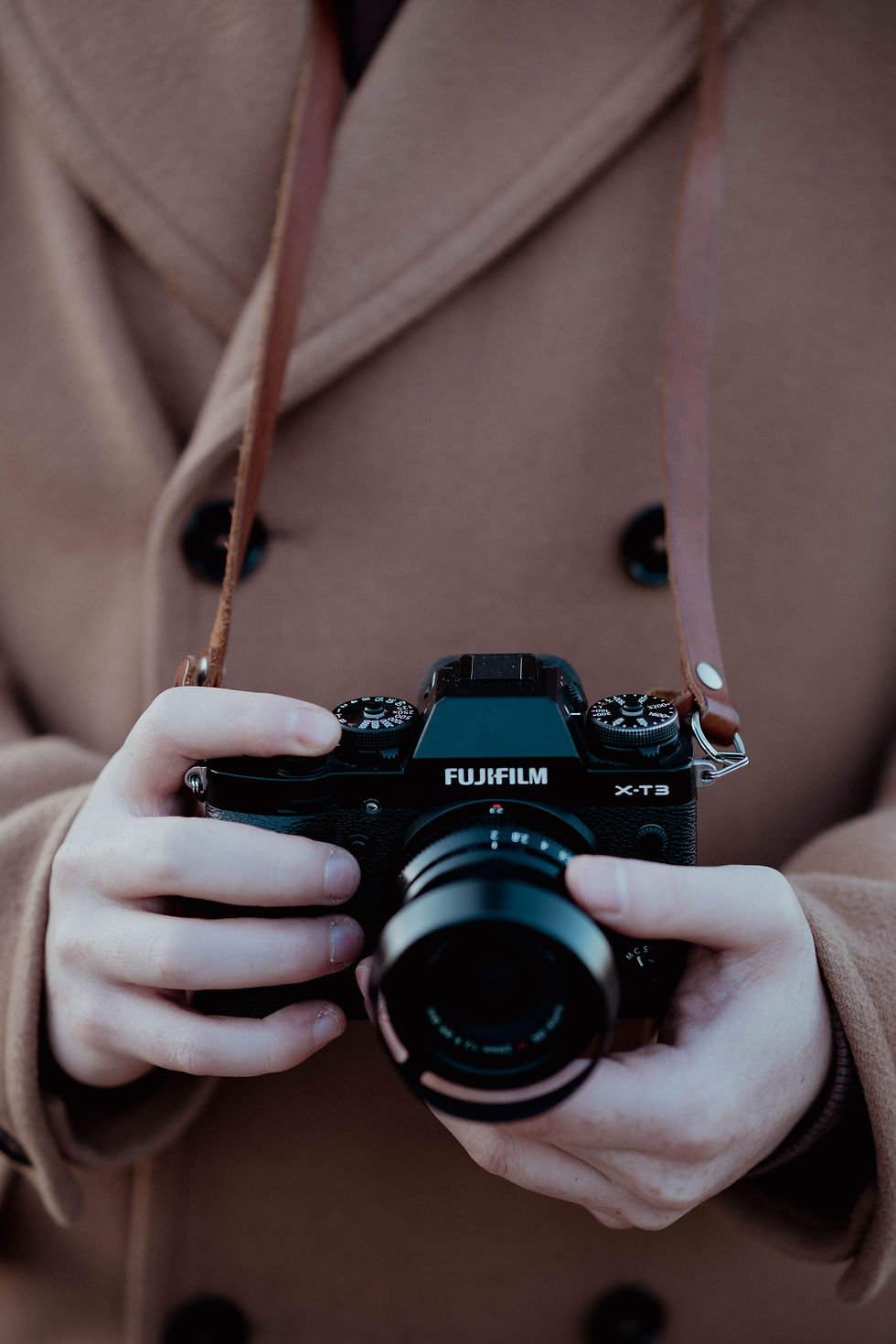
Fujifilm X100VI
The Fujifilm X100VI is the cool guy’s camera, and for once, the hype is mostly deserved. Compact, beautifully designed, and loaded with Fuji’s famous film simulations, it delivers images with soul straight out of the camera. Its fixed 35mm-equivalent lens forces you to move, compose, and think — which is exactly what makes it brilliant for street photography and everyday visual storytelling.
This is not the camera for sports or wildlife. It is the camera for shadows on brick walls, late-night diners, old cars, interesting faces, and cities that look better in the rain.
Nikon Zf
The Nikon Zf looks like it was stolen from a stylish war correspondent in 1973, but inside it is a modern full-frame mirrorless camera. That combination makes it a terrific choice for photographers who care about both image quality and the ritual of photography. The dials, the body, the feel — it all encourages a slower, more deliberate approach.
It is especially strong for portraits, documentary-style shooting, black-and-white work, and travel photography. If you want a camera that feels like an object, not just a gadget, the Zf is a gentleman’s choice.
Sony A7 IV
The Sony A7 IV is less romantic than the Fuji or Nikon, but it is a beast. With a full-frame sensor, excellent autofocus, strong low-light performance, and serious video capability, it is one of the best all-rounders on the market. If you want one camera that can handle portraits, landscapes, events, travel, and creative projects, this is a safe bet.
It is also a great option if you plan to grow into photography professionally. Sony’s lens ecosystem is enormous, which means you can build a proper kit over time instead of hitting a wall after six months.
Canon EOS R50
For beginners, the Canon EOS R50 is a smart, approachable entry point. It is light, relatively affordable, and capable of excellent results without making you feel like you need a degree in optical engineering. The 24.2-megapixel APS-C sensor gives plenty of image quality for prints, social media, personal projects, and learning the craft.
This is the camera for the man who wants to stop talking about “getting into photography” and actually get into photography.
Ricoh GR III
Small enough to slip into a jacket pocket, the Ricoh GR III is a cult favourite among street photographers. It is discreet, sharp, fast, and wonderfully unfussy. It does not scream “photographer,” which is part of the charm. You can carry it everywhere, and that is half the battle.
The GR III is ideal for urban photography, travel, architecture, and those fleeting in-between moments that disappear the second you start fumbling with a giant camera bag.
Pentax 17
Film photography is back, because apparently we all needed one more expensive habit. The Pentax 17 is a new half-frame film camera that gives you twice as many shots per roll, making it a friendly way to explore analog photography. The look is nostalgic, imperfect, and often beautiful.
If digital cameras are about control, film is about surrender. That is the art of it.
Nikon F3 or Pentax K1000
For a proper vintage film experience, consider a Nikon F3 or Pentax K1000. These cameras teach you exposure, patience, and discipline. They are not convenient, but that is the point. Shooting film forces you to slow down and make each frame count.
For photography as art, that might be the best lesson of all.
Final Shot
The best camera is not necessarily the most expensive one. It is the one that changes how you see. For style and soul, choose the Fujifilm X100VI. For timeless full-frame craft, go Nikon Zf. For versatility, pick the Sony A7 IV. For beginners, the Canon R50 is hard to beat. For street work, grab the Ricoh GR III. And for pure romance, load some film and accept that half your shots may be terrible — but the good ones will feel like magic.


Comments