
Luxury Northern Europe Travel Guide: Why the Far North is the Ultimate Escape
Planning Your Luxury Northern Europe Travel Itinerary

There is a precise, predictable moment during a traditional beach holiday when the fantasy crumbles. It usually arrives on day three around 2:00 PM, while you are ducking stray beach balls, navigating lukewarm gin and tonics, and listening to someone else’s portable speaker blast pop remixes into the humid air.
If your idea of relaxation involves fewer crowded loungers and significantly more raw, untamed majesty, it is time to pivot north.
Forget the sunbed scramble. The modern luxury travel landscape has shifted away from tropical languor and toward dramatic, soul-clearing landscapes. Rather than picking a single base, the ultimate cold-climate escape spans two distinct, complementary realms: The volcanic, geothermal wilderness of Northern Iceland, followed by a short hop across to the deep-cut, architectural fjords of Western Norway.
Here is how to execute the ultimate Trans-Fjord journey.
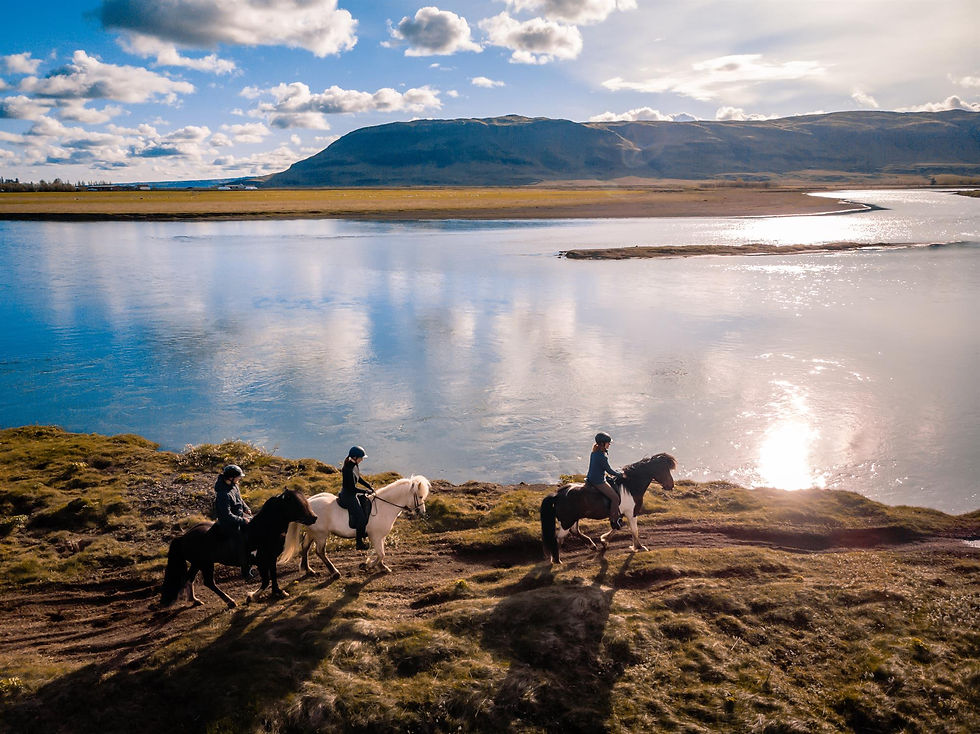
Part I: Iceland — Iceland: Volcanoes, Glaciers, and Geothermal Luxury
Your journey begins by flying into Reykjavik, before immediately bypassing the crowded tour buses of the Golden Circle and heading north toward the Troll Peninsula and the remote Westfjords.
The Vibe: Raw, Unearthly & Primal
Stepping off the tarmac in Iceland feels less like arriving in another country and more like landing on an exceptionally well-appointed alien world. The light here is different—sharp, low-angled, and crystal clear, casting long shadows across vast expanses of moss-covered lava fields. The air is cold enough to hit the back of your throat with a crisp, cleansing bite, carrying the faint, earthy scent of volcanic ash and sulfur from hot springs bubbling beneath the crust.
There is a vast, quiet gravity to the island. As you travel further north toward the Troll Peninsula, the landscape strips away the unnecessary clutter of modern life. It is raw, prehistoric, and intensely grounding—a place where towering basalt cliffs drop straight into the dark, white-capped North Atlantic, and the sheer scale of the wilderness forces an immediate, refreshing mental reset.
The Base Camps
Deplar Farm (Troll Peninsula): Hidden deep within the Fljót Valley—where snowdrifts carve deep into the black peaks—this converted 15th-century sheep farm operated by Eleven Experience is a masterclass in isolated indulgence. Step out onto the turf-roofed deck at dusk: the damp air smells faintly of wild moss and birch woodsmoke. You slip into an indoor-outdoor geothermal pool heated precisely to 38°C. An underwater sound system hums softly beneath the surface as a bartender hands you a heavy glass of small-batch Icelandic gin. By day, a private helicopter touches down on the front lawn to spirit you away to virgin powder lines, where you ski from mountain summit straight down to the ocean edge.

Deplar Farm (Troll Peninsula) The Retreat at Blue Lagoon (Grindavík): Carved directly into a jagged, 800-year-old volcanic lava flow, this subterranean enclave feels completely detached from civilised chaos. Stepping out onto your private suite’s terrace, you descend a stone ramp straight into opaque, mineral-dense thermal waters bounded by walls of raw basalt rock. There are no crowds, no noise—just the hiss of steam rising into the cold mountain air.

The Retreat at Blue Lagoon (Grindavík)
The Culinary Angle: Earth, Smoke & Glacial Cold
Forget outdated tropes about fermented shark; modern Icelandic fine dining is an exercise in elemental purity. Cooking here is intimately tied to the earth itself, with chefs utilizing geothermal heat to bake traditional rye bread underground for 24 hours, yielding a dense, caramelised loaf served warm with sea-salted cultured butter.
Plates feature line-caught Arctic char pulled from glacial rivers hours prior, seared crisp on the skin and paired with foraged sea kelp, wild crowberries, and birch oil. The mountain lamb—raised free-roaming on high-altitude slopes—grazes exclusively on wild moss and thyme, giving the tender meat a delicate, herbal depth that requires little more than open-fire smoke and sea salt. Dinner is typically served in subterranean stone dining rooms cut into lava rock, accompanied by single-malt whiskies poured over hand-carved, crystal-clear ice sourced from ancient glaciers.
P.S. If you do find yourself on an Icelandic beach, please remember that black volcanic sand is still sand. It will find its way into your luggage, your shoes, and your soul, remaining there until at least late November. You have been warned.
Connecting the Journey: The Trans-Fjord Transit
Bridging these two distinct northern worlds is remarkably effortless. A direct two-hour flight from Keflavík (KEF) straight into Ålesund (AES) or Bergen (BGO) via Icelandair or SAS bridges the gap between volcanic solitude and deep-fjord grandeur in time for late afternoon cocktails.
Part II: Norway — Granite, Glass & Deep Electric Waters
Arriving in Western Norway, the raw, volcanic starkness of Iceland gives way to Norway’s lush, towering granite landscapes.

The Vibe: Cinematic, Ancient & Deeply Quiet
Where Iceland is stark, open, and elemental, Western Norway is grand, moody, and dramatic. Here, ancient glaciers have carved deep, vertical gashes into the earth, creating fjords where mountain walls rise thousands of feet straight out of mirror-still, emerald waters.
The air is rich and intoxicating—a sharp cocktail of sea salt, wet granite, crushed birch leaves, and lingering woodsmoke from hillside chimneys. Clouds hang low like delicate silk ribbons across the cliff tops, and sound behaves differently here; the deep canyon walls amplify the hush of nature while muffling the noise of the outside world. It is an atmosphere of quiet grandeur, where deep timber architecture and Scandinavian minimalism exist in absolute harmony with the wilderness.
The Base Camps
Juvet Landscape Hotel (Valldal): Hidden inside an old-growth birch forest near the UNESCO-listed Geirangerfjord, Juvet Landscape Hotel delivers radical Scandinavian minimalism. Inside your dark timber-and-glass pod—suspended on steel stilts over the roaring Valldøla River—there are no curtains. As you lie back on crisp linens, the dark interior vanishes, leaving you floating over a live, floor-to-ceiling canvas of rushing whitewater, emerald moss, and sheer rock faces drenched in morning mist.
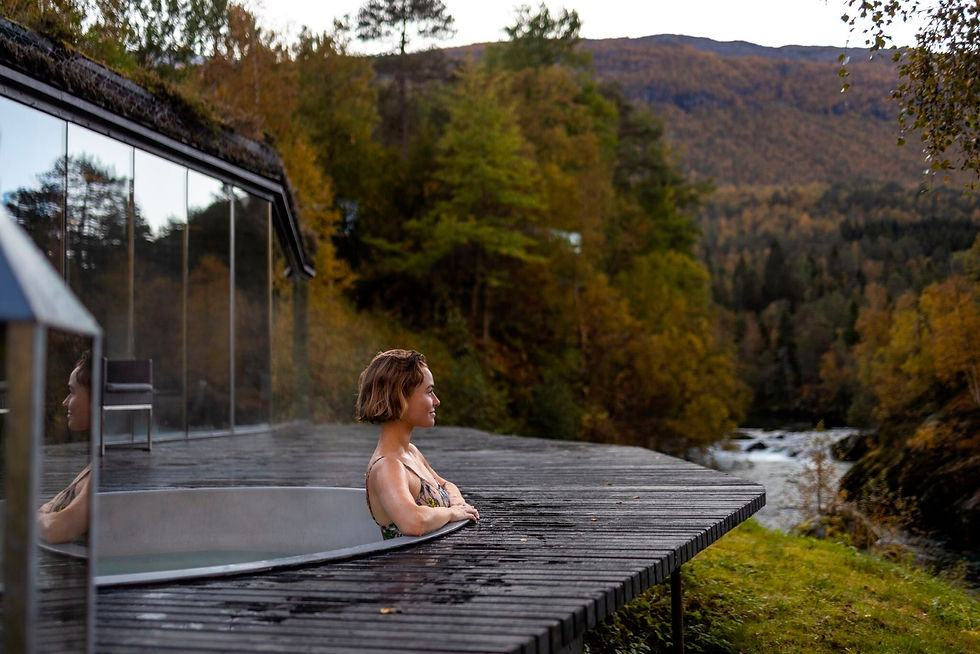
Juvet Landscape Hotel in Valldal - Falstaff Storfjord Hotel (Skodje): Perched high on a wooded ridge overlooking the Sunnmøre Alps, Storfjord Hotel offers pure, quiet luxury. Stepping onto your private timber balcony in a heavy wool robe, coffee in hand, you watch the valley fog slowly peel off the black fjord below. Down at the private pontoon, a handcrafted wooden launch stands ready to carry you out into glass-still waters for an afternoon of secluded fjord navigation.

Storfjord Hotel- Skodje, Norway
The Culinary Angle: Deep Fjords, Ocean Harvest & Foraged Terroir
While Iceland’s kitchen is born of fire and lava, Norway’s gastronomy is dictated by the icy, pristine ocean depths and ancient coastal preservation techniques. This is high-latitude seafood at its absolute peak.
Expect massive, sweet King Crab legs pulled directly from the freezing depths of Finnmark, alongside hand-dived scallops so fresh they are sliced raw and dressed simply with cold-pressed rapeseed oil and spruce-tip vinegar. Norwegian chefs excel at balancing fresh catch with aged complexity: cured reindeer loin, juniper-smoked game, and traditional rakfisk transformed into subtle, modern tartares. Dining in a waterside timber boathouse means meals are deeply seasonal—punctuated by tart, golden cloudberries foraged from mountain bogs and small-batch aquavit distilled with local caraway and botanicals.
Navigating the Waterways
While massive cruise liners choke Southern European ports, the Norwegian fjords are best experienced at water level. Boarding a whisper-quiet, zero-emission electric vessel on Geirangerfjord or opting for Hurtigruten’s Signature Voyages along the coast lets you glide past cascading waterfalls like the Seven Sisters without the drone of a diesel engine. The silence is absolute—broken only by the sound of spray against the hull and the wind through the pines.
Seasonality: When to Make the Journey
Season | The Experience | The Highlight |
Midnight Sun (May – August) | Endless daylight, lush green valley walls, open mountain passes, and optimal conditions for fjord cruising and sea kayaking. | 24-hour daylight and summit-to-sea heli-skiing in late spring. |
Aurora Season (September – March) | Crisp sub-zero air, deep snowdrifts, roaring fireplaces, and stark contrast between freezing landscapes and thermal waters. | Northern Lights viewing directly from geothermal pools and glass hotel pods. |
Cold-Climate Performance: What to Pack
The golden rule of Arctic travel is simple: there is no bad weather, only bad tailoring. Crossing the 66th parallel requires high-performance technical gear that looks refined both in a helicopter and at a dinner table.
Outerwear: Premium technical shells from Reykjavik’s own 66°North or high-grade waterproof jackets from Arc'teryx.
Knitwear: Heavyweight, breathable merino thermals and traditional Scandinavian knitwear from heritage mills like Dale of Norway.
Footwear: Waterproof leather hiking boots from Danner or Hanwag for mountain treks, along with fleece-lined slip-ons for evening loungewear.
The Verdict
A true gentleman does not travel merely to bake under a tropical sun; he travels to be invigorated, intrigued, and restored. Trading overcrowded beaches for a two-stage journey through snow-capped peaks, geothermal waters, and silent fjords might just be the finest travel decision you make this year.
Pack your tailored wool layers, pack your boots, and leave the suntan lotion at home. The Luxury Northern Europe is waiting.
P.S. A quick word on local etiquette: in Norway, complaining about the rain is viewed not as a valid observation, but as a personal character flaw. Pack the jacket, order an aquavit, and look sternly at the horizon like a proper Norseman.
Editor’s Note: Gentlemen’s Digest remains fiercely independent. We do not accept payment, free accommodation, or sponsored perks for our editorial recommendations. If a destination, venue, or piece of kit is featured here, it is because it earned its place on merit alone.


Comments